Here and Elsewhere (Ici et ailleurs), dir. Jean-Luc Godard and Anne-Marie Miéville, France 1976, 53 min
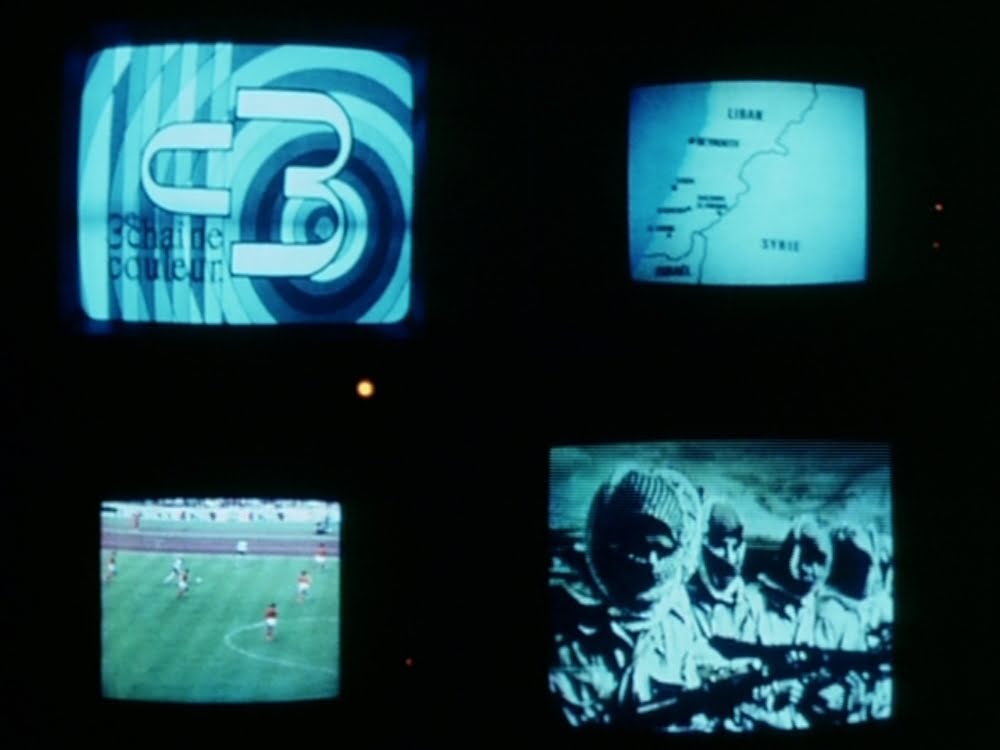
Towards the end of 1969 the Dziga Vertov group filmmaking collective began planning a film on the situation and struggle of the Palestinian people in the aftermath of the Six-Day War of June 1967, when Israel had defeated the Jordanian, Syrian and Egyptian armies with remarkable speed, capturing the West Bank and East Jerusalem from Jordan, the Golan Heights from Syria, and the Gaza Strip and Sinai desert from Egypt.
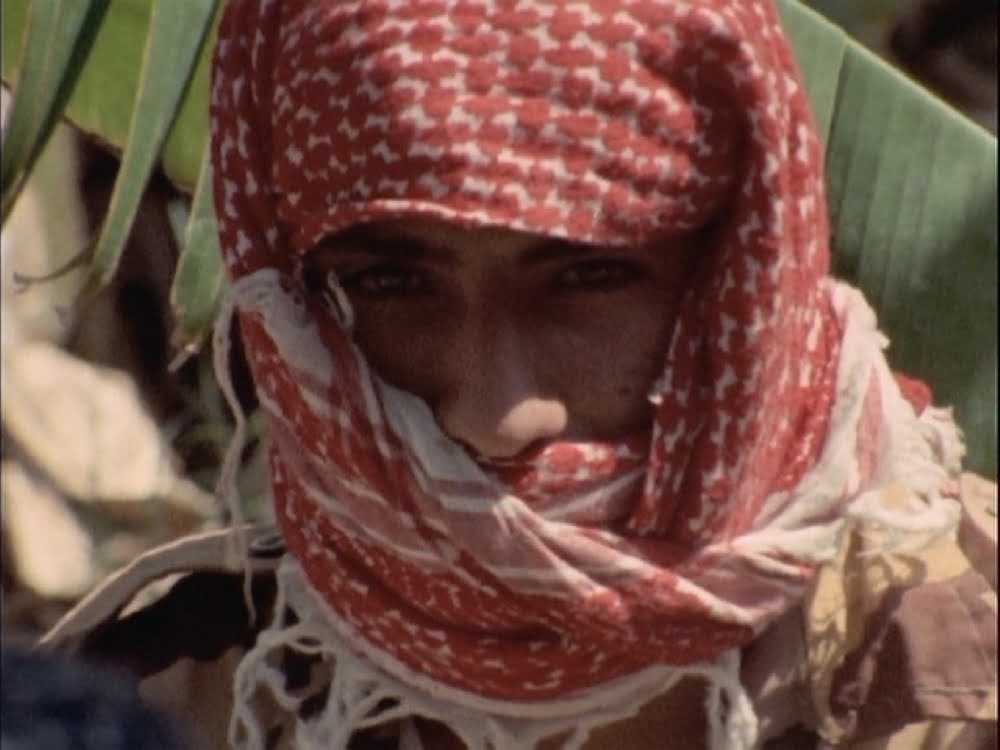
The principal members of the group at this point were Jean-Pierre Gorin, Jean-Luc Godard, Armand Marco, Natalie Biard, Paul Bourron, Gérard Martin, Anne Wiazemsky and Christine Aya. The film, to be titled Jusqu’à la victoire: Les méthodes de pensée et de travail de la révolution palestinienne (Until Victory: The Methods of Thinking and Working of the Palestinian Revolution), was shot by Godard, Gorin and Marco in Jordan, Lebanon and Syria between February and August 1970 in association with the largest group within the then resurgent Palestine Liberation Organisation (PLO), Fatah.
A key precursor to Jusqu’à la victoire was Palestine vaincra (Palestine Will Win, 1969), which was made by Jean-Pierre Olivier de Sardan, a member of the far-left Gauche Prolétarienne (Proletarian Left). All copies of Palestine vaincra had long been considered lost until archivist Draye Wilson discovered a print in the Third World Newsreel Archives in 2023, thereby making this significant film available once again.
The Dziga Vertov group borrowed the title for their film from a Fatah slogan, ‘Revolution until victory!’, as did the US Newsreel collective for their We are the Palestinian People: Revolution Until Victory (1973). Godard, Gorin and Marco also encountered the Swiss Francis Reusser in the Middle East, where he was shooting Biladi, une révolution (My Country, A Revolution, 1970). Biladi is attributed in an intertitle to the militant group Le Collectif Rupture, to which Reusser belonged at the time alongside his then partner, Anne-Marie Miéville, who also contributed to the film.
The group spent a good deal of time in the Middle East with Mustafa Abu Ali and Hani Jawhariyyeh, who were responsible for Fatah’s then recently formed Palestine Film Unit. Abu Ali, who often talked subsequently about the importance of his discussions with Godard for his own quest to develop a novel form of film language through which to articulate the struggle of the Palestinians, went on to make the landmark They Do Not Exist (1974).
Work on Jusqu’à la victoire ground to a sudden halt in late 1970 following the events of Black September, when King Hussein’s army crushed the Palestinian guerrilla forces in Jordan. This resulted in the deaths of thousands of Palestinian fighters and civilians, including many of those whom Godard, Gorin and Marco had filmed, leaving the group with approximately ten hours of footage and an obsolete editing plan.
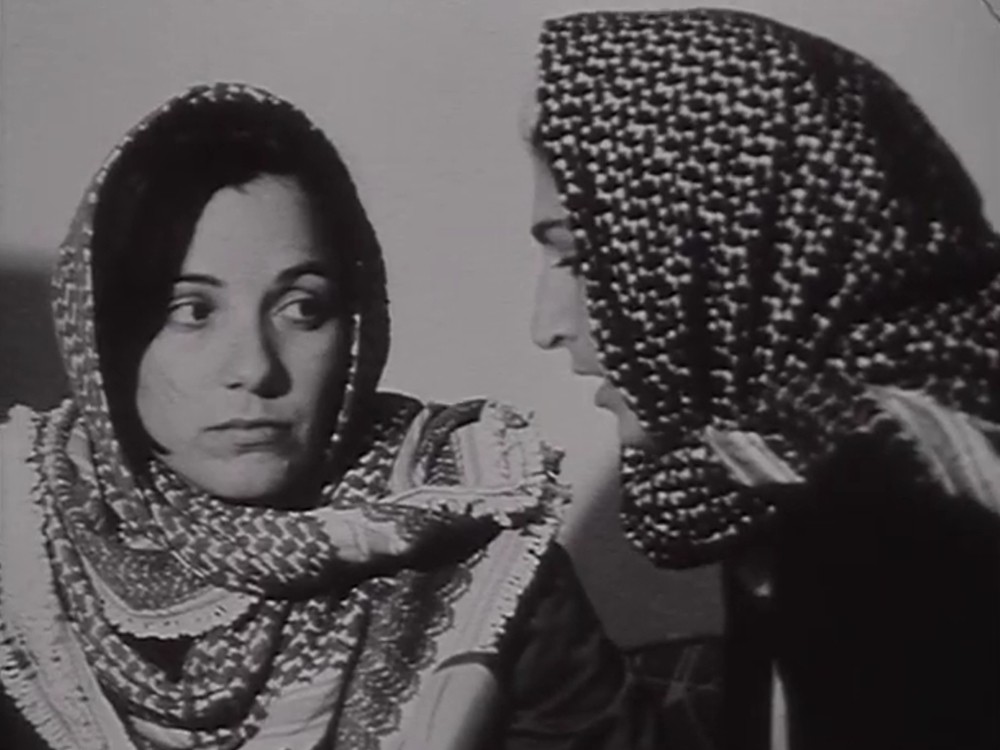
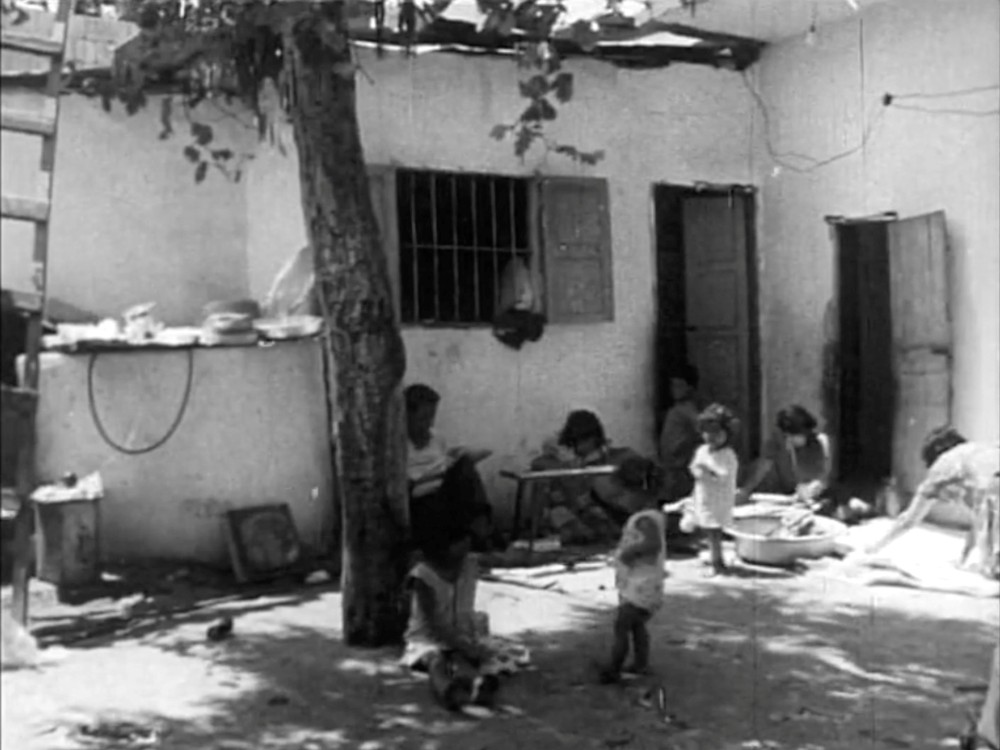
Although Gorin and Godard tried repeatedly to organise the material, it was only in 1974 that the latter, now working closely with Miéville, returned to the footage and forged a formally innovative way of completing the film as a critique of the Dziga Vertov group’s preconceptions and methods. According to Miéville, they worked every day for eighteen months on editing the film that eventually became Ici et ailleurs (Here and Elsewhere, 1976). It is the cornerstone of their collaborative work as ‘Sonimage’ in the 1970s and of their multifaceted collaboration of the ensuing four decades.
This screening will be introduced by Michael Witt.
Programme
Palestine Will Win (Palestine vaincra), dir. Jean-Pierre Olivier de Sardan, France 1969, 28 min
My Country, A Revolution (Biladi, une révolution), dir. Francis Reusser, Switzerland 1970, 60 min
We are the Palestinian People: Revolution Until Victory, dir. Newsreel, USA 1973, 49 min [shot 1971]
10/15 min interval
They Do Not Exist, dir. Mustafa Abu Ali, Lebanon 1974, 26 min
Here and Elsewhere (Ici et ailleurs), 53 min, 1976 [made 1970/1974-75]
The principal members of the group at this point were Jean-Pierre Gorin, Jean-Luc Godard, Armand Marco, Natalie Biard, Paul Bourron, Gérard Martin, Anne Wiazemsky and Christine Aya. The film, to be titled Jusqu’à la victoire: Les méthodes de pensée et de travail de la révolution palestinienne (Until Victory: The Methods of Thinking and Working of the Palestinian Revolution), was shot by Godard, Gorin and Marco in Jordan, Lebanon and Syria between February and August 1970 in association with the largest group within the then resurgent Palestine Liberation Organisation (PLO), Fatah.
A key precursor to Jusqu’à la victoire was Palestine vaincra (Palestine Will Win, 1969), which was made by Jean-Pierre Olivier de Sardan, a member of the far-left Gauche Prolétarienne (Proletarian Left). All copies of Palestine vaincra had long been considered lost until archivist Draye Wilson discovered a print in the Third World Newsreel Archives in 2023, thereby making this significant film available once again.
The Dziga Vertov group borrowed the title for their film from a Fatah slogan, ‘Revolution until victory!’, as did the US Newsreel collective for their We are the Palestinian People: Revolution Until Victory (1973). Godard, Gorin and Marco also encountered the Swiss Francis Reusser in the Middle East, where he was shooting Biladi, une révolution (My Country, A Revolution, 1970). Biladi is attributed in an intertitle to the militant group Le Collectif Rupture, to which Reusser belonged at the time alongside his then partner, Anne-Marie Miéville, who also contributed to the film.
The group spent a good deal of time in the Middle East with Mustafa Abu Ali and Hani Jawhariyyeh, who were responsible for Fatah’s then recently formed Palestine Film Unit. Abu Ali, who often talked subsequently about the importance of his discussions with Godard for his own quest to develop a novel form of film language through which to articulate the struggle of the Palestinians, went on to make the landmark They Do Not Exist (1974).
Work on Jusqu’à la victoire ground to a sudden halt in late 1970 following the events of Black September, when King Hussein’s army crushed the Palestinian guerrilla forces in Jordan. This resulted in the deaths of thousands of Palestinian fighters and civilians, including many of those whom Godard, Gorin and Marco had filmed, leaving the group with approximately ten hours of footage and an obsolete editing plan.
Although Gorin and Godard tried repeatedly to organise the material, it was only in 1974 that the latter, now working closely with Miéville, returned to the footage and forged a formally innovative way of completing the film as a critique of the Dziga Vertov group’s preconceptions and methods. According to Miéville, they worked every day for eighteen months on editing the film that eventually became Ici et ailleurs (Here and Elsewhere, 1976). It is the cornerstone of their collaborative work as ‘Sonimage’ in the 1970s and of their multifaceted collaboration of the ensuing four decades.
This screening will be introduced by Michael Witt.
Programme
Palestine Will Win (Palestine vaincra), dir. Jean-Pierre Olivier de Sardan, France 1969, 28 min
My Country, A Revolution (Biladi, une révolution), dir. Francis Reusser, Switzerland 1970, 60 min
We are the Palestinian People: Revolution Until Victory, dir. Newsreel, USA 1973, 49 min [shot 1971]
10/15 min interval
They Do Not Exist, dir. Mustafa Abu Ali, Lebanon 1974, 26 min
Here and Elsewhere (Ici et ailleurs), 53 min, 1976 [made 1970/1974-75]
01:00 pm
Sun, 29 Mar 2026
Cinema 1
Ticket information
- All tickets that do not require ID (full price, disabled, income support) can be printed at home or stored in email
- For aged-based concession tickets (under 25, student) please bring relevant ID to collect at the front desk before the event.
Access information
Cinema 1
- Both our Cinemas have step free access from The Mall and are accessible by ramp
- We have 1 wheelchair allocated space with a seat for a companion
- All seats are hard back, have a crushed velvet feel and they do not recline
- These are our seat size dimensions: W 42 x D 45 x H 52
- Arm rest either side of the seat dimensions: L 27 x W 7 x H 20
for the following requirements:
- We have unassigned seating. If you require a specific seat, please reserve this in advance
- Free for visitors where ticket prices are a barrier, please email
All films are ad-free and 18+ unless otherwise stated, and start with a 10 min. curated selection of trailers.
Members+ and all Patrons gain free entry to all cinema screenings, exhibitions, talks, and more.
Join today as a Member+ for £25/month.